Turning documentation into a product discovery tool
How I transformed UP42's documentation website from a help center into an award-winning unified discovery experience.
UP42 is a geospatial marketplace for satellite, aerial, and elevation data from multiple providers, with processing available on the same platform.
As product lead, I led a team consisting of technical writers, product managers, and frontend engineers building the Documentation hub. Our product supported customers from the discovery and evaluation of geospatial offerings through to the point at which they were ready to place an order. The portal was designed to guide customers through evaluation and bring them to the point where they could move confidently into the ordering experience.
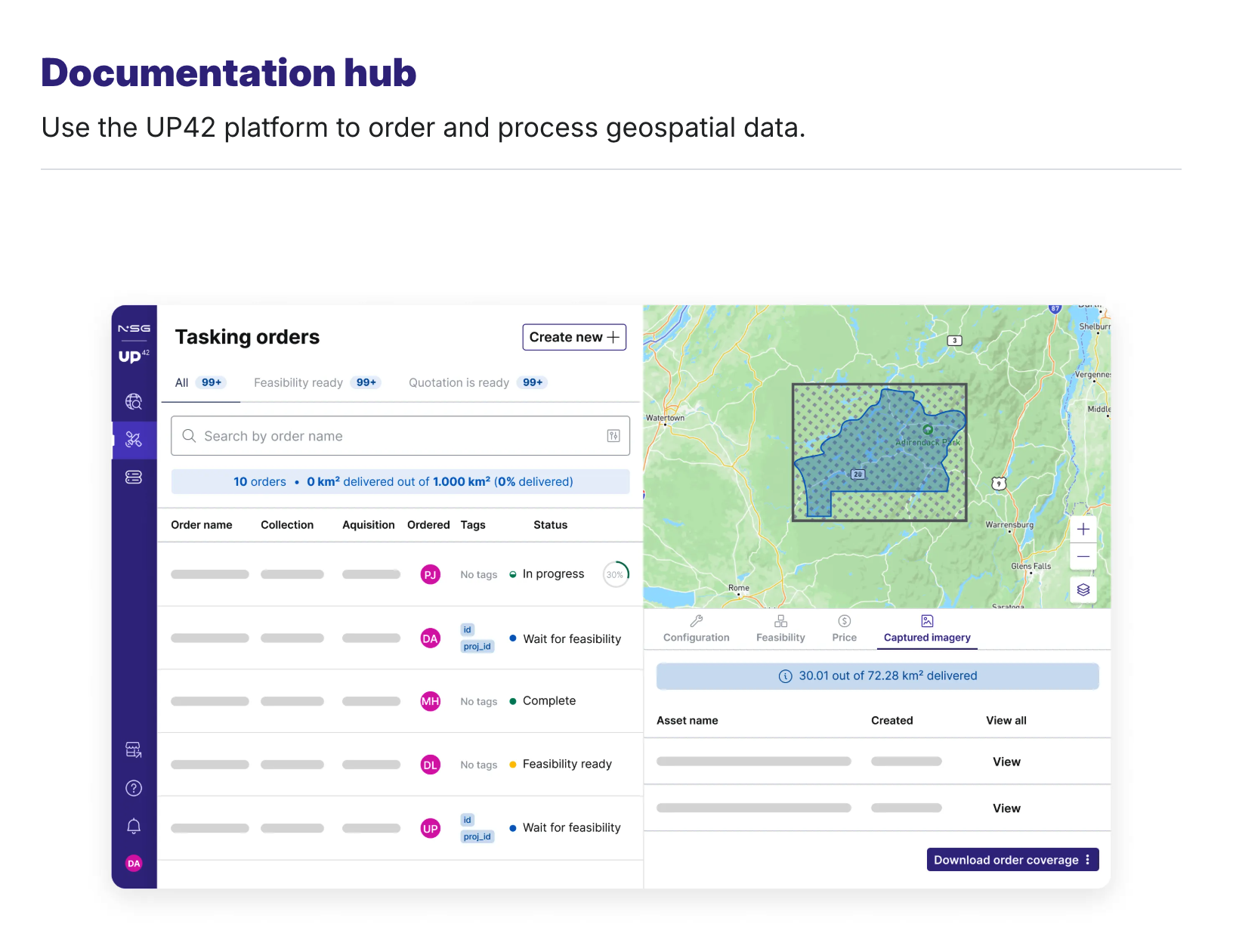
When I joined in 2022, the portal operated as a help center. Documentation was produced after releases rather than planned alongside them. Customers evaluating data had to piece together the information they needed from provider-specific language and inconsistent specifications, while the ordering experience assumed customers already knew what to purchase.
Building a decision-making product
When I joined as a technical writer, one of my first product decisions was how the documentation should sound. Writing in the style of internal specifications doesn’t support evaluation or purchase, so with my team, we rewrote the portal documentation around two core principles:
We help users
We do not only describe product capabilities. We explain how those capabilities help the user make a decision.
We talk on equal terms
We advise users rather than instruct them. We know UP42’s products well and are there to help.
I interviewed product managers and engineering and restructured the portal’s information architecture and its voice to make the experience clearer and more useful to the people using it. The writing focused on what users needed to know and do, using language that was direct, natural, and easy to scan.
With my team, we put the most useful information where users would expect to find it and removed details that didn’t help them make a decision. This established the portal as a product with clear goals:
- Help customers understand the product and decide what to order
- Provide a source of truth for the organization and keep product information aligned.
Establishing the portal as the source of truth
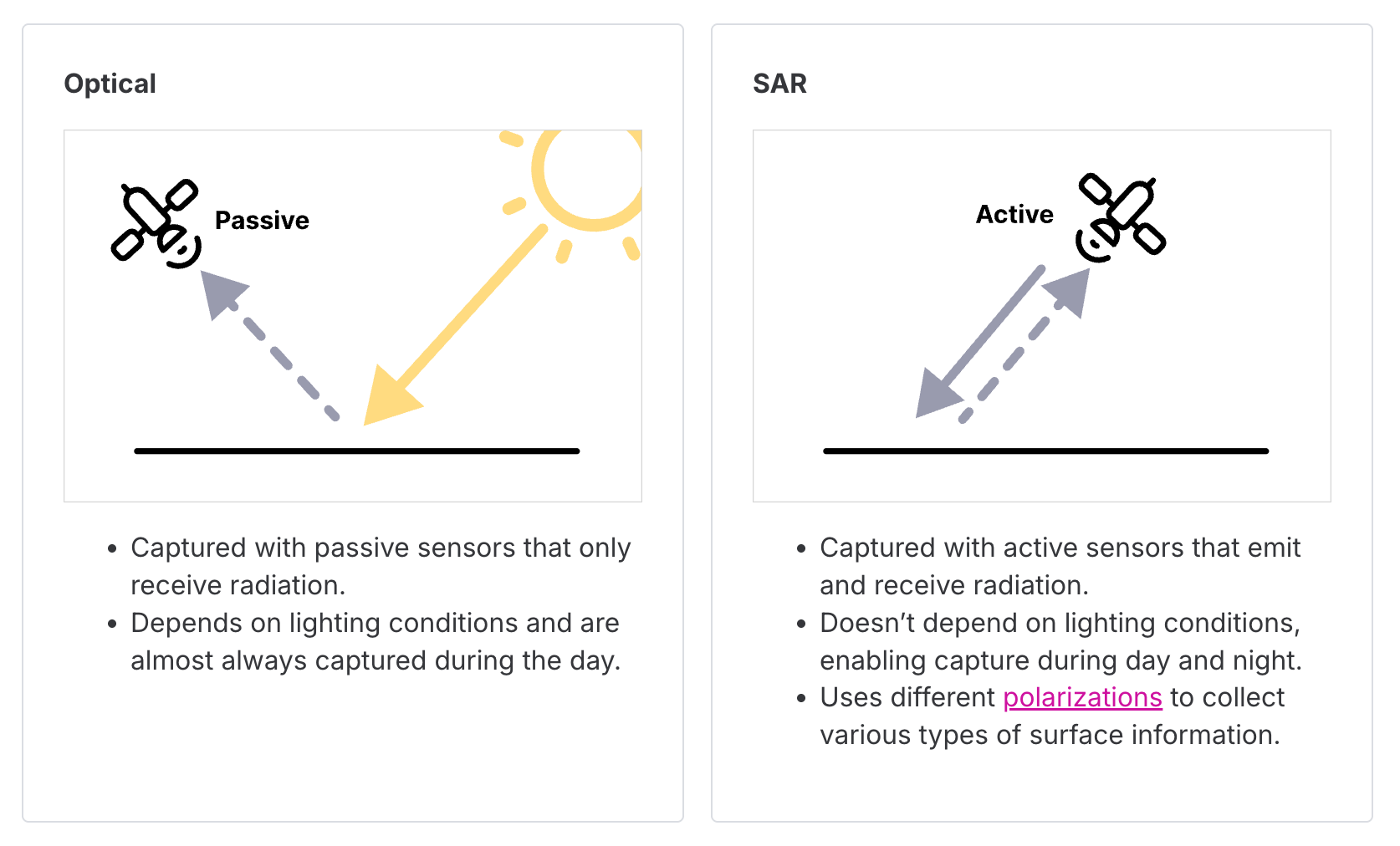
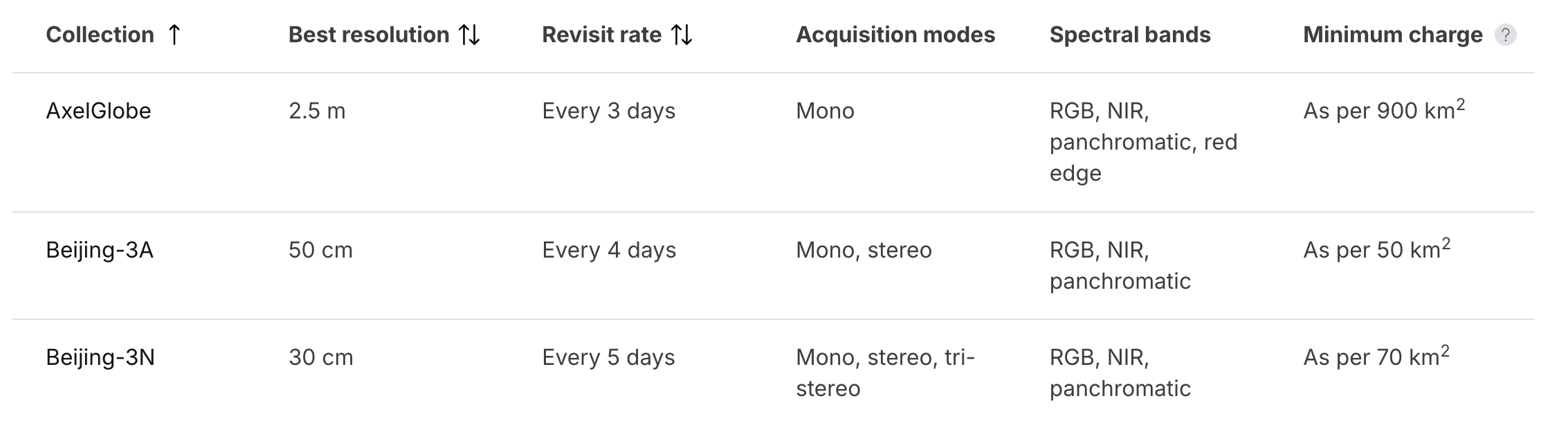
UP42 offered dozens of collections from different providers, each using its own terms for resolution, spectral bands, acquisition modes, coverage, and commercial conditions. Without a shared structure, users couldn’t easily compare data products, and evaluation often stopped before an order could be placed. The portal’s role became to bring this information together once, in a format that could be used across all offerings.
We established the portal as the source of truth for every offering, applying the same structure, vocabulary, and technical dimensions to every provider so that collections could be compared on equal terms.
The work was both editorial and technical. It required alignment between CS, Partnerships, Marketing, Product, and Engineering on shared definition of a geospatial collection, and the continued maintenance of that model as new providers were added.
Solving for the ordering gap
Once the language and the data model were stable, the product question changed. The portal was a reliable source of information, but it remained a document to be read. The objective became to reduce the time from discovery to ordering.
We established a continuous customer interview process and synthesized the findings into an Opportunity Solution Tree. That tree guided team’s prioritization. We developed solutions for those opportunities, launched the ones worth investing in, and tracked how they were used.
- Speak with customers who are evaluating data options.
- Capture their needs and wants in a structure the team can use to debate and prioritize.
- Identify solutions we could build to improve discoverability and bring customers closer to ordering.
- Assess how users use the developed solution and whether it helps us achieve our product outcome (product outcome = customer need + business need).
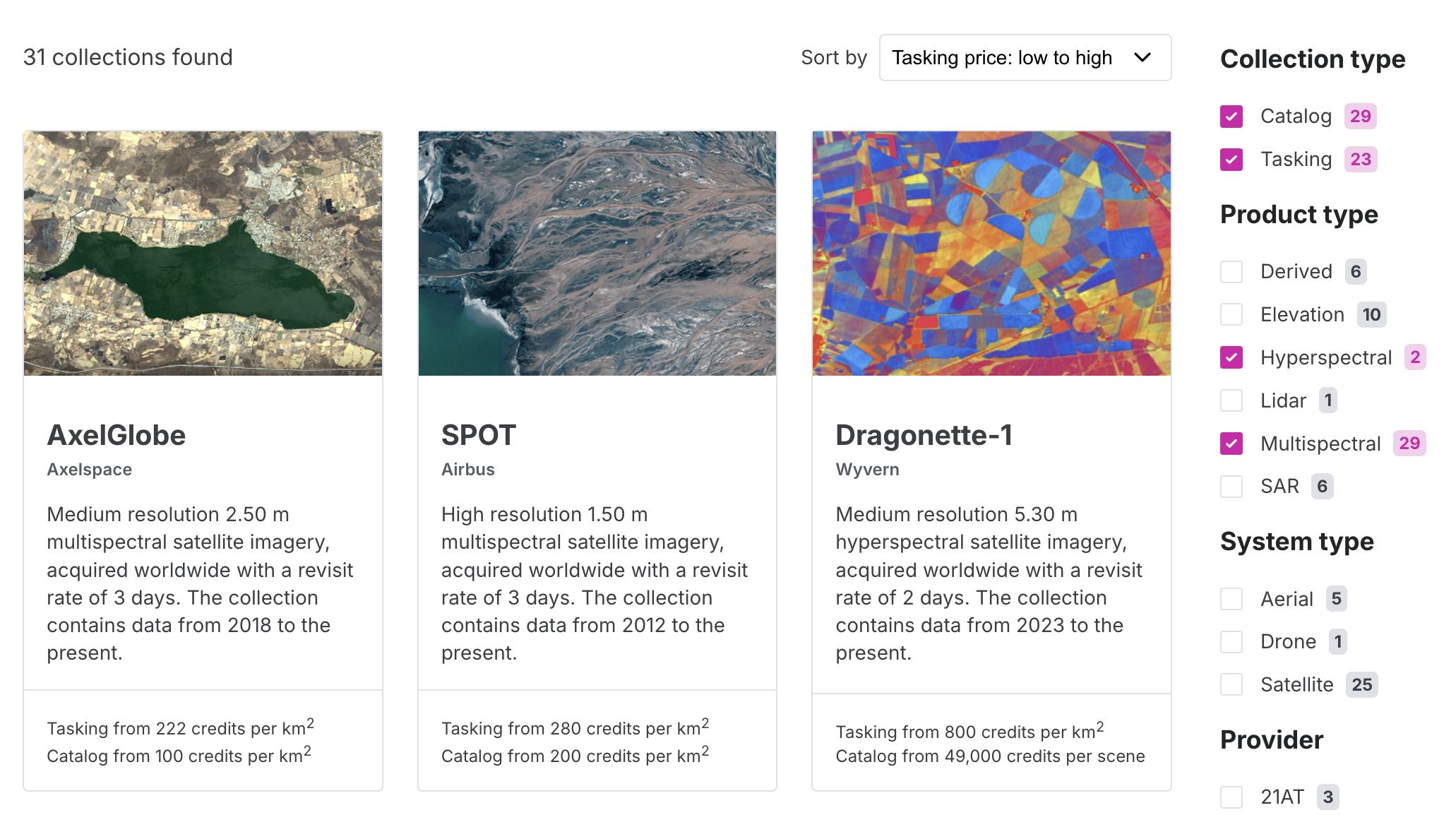
We iterated on the marketplace and built a companion comparison tool with filters for key evaluation criteria. From every collection page, users had a clear path to assess sample data and place an order.
Recognition for the portal
The work turned the portal into a discovery product. Customers could find a suitable collection without learning each provider’s terminology and reach ordering stage with a purchasing decision. In 2025, the portal received Best Developer Portal for Data Products at the DevPortal Awards.
A quote from DevPoral Awards’ jury panel:
The UP42 portal was seen as tackling a very challenging and complicated data set, and they set a high standard for compliance and transparency. This portal excels at treating geospatial offerings as data products, with clear provenance for both provider and processing levels, strong interpretability, and a practical, centralized catalog. Discovery and persona coverage are top‑notch, and for every API exposed, they explicitly presented the End User Licensing Agreement.